At the outset of World War II in September 1939, Denmark declared itself neutral, but that neutrality did not prevent Nazi Germany from occupying the country soon after the outbreak of war; the occupation lasted until Germany's defeat. The decision to occupy Denmark was taken in Berlin on 17 December 1939. On 9 April 1940, Germany invaded Denmark in Operation Weserübung. In contrast to the situation in other countries under German occupation, most Danish institutions continued to function relatively normally until 1945. Both the Danish government and King of Denmark remained in the country in an uneasy coalition between a democratic system and a totalitarian one until, amidst growing civilian resistance and unrest, the Danish government refused to further cooperate with the Germans' demands; in response, on 29 August 1943, Germany declared martial law and placed Denmark under direct military occupation, which lasted until the Allied victory on 5 May 1945.
World War II: German-occupied Denmark scuttles most of its navy; Germany dissolves the Danish government.
On August 29, in the year 1943, World War II: German-occupied Denmark scuttles most of its navy; Germany dissolves the Danish government. This event is recorded as a Historical Events event in the history of August 29, one of 431 recorded events on this date across all of history.
Key Facts
- This event took place on August 29, 1943 (AD era).
- It is categorised as a Historical Events event in recorded history.
- Referenced in 2 Wikipedia articles.
- Wikipedia source last updated on 7 July 2026.
On This Date in History 431
This article draws on content from Wikipedia, available under CC BY-SA 4.0.
More on August 29
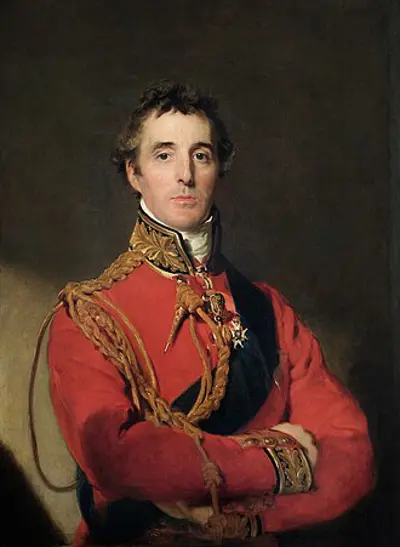
British troops under Sir Arthur Wellesley defeat a Danish militia outside Copenhagen in the Battle of Køge.
Field Marshal Arthur Wellesley, 1st Duke of Wellington, was a British Army officer and statesman. A leading figure in early-19th-century British politics, Wellesley served as Prim…
British troops under Sir Arthur Wellesley defeat a Danish militia outside Copenhagen in the Battle of Køge.
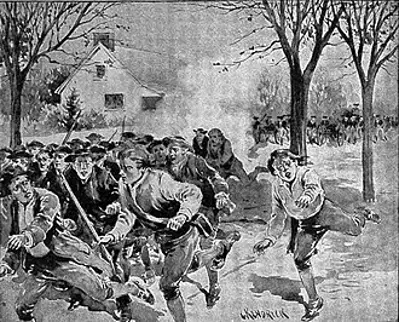
Shays' Rebellion, an armed uprising of Massachusetts farmers, begins in response to high debt and tax burdens.
Shays's Rebellion was an armed uprising in Western Massachusetts and Worcester in response to a debt crisis among the citizenry and in opposition to the state government's increas…
Shays' Rebellion, an armed uprising of Massachusetts farmers, begins in response to high debt and tax burdens.

American Revolutionary War: American forces battle and defeat the British and Iroquois forces at the Battle of Newtown.
The Haudenosaunee Confederacy, also known as the Iroquois, are a confederacy of Iroquoian-speaking indigenous peoples in northeast North America. They were known by the French dur…
American Revolutionary War: American forces battle and defeat the British and Iroquois forces at the Battle of Newtown.
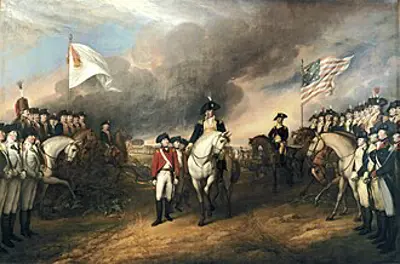
American Revolutionary War: British and American forces battle indecisively at the Battle of Rhode Island.
The American Revolutionary War, also known as the Revolutionary War or American War of Independence or simply the American Revolution, was the armed conflict that comprised the fi…
American Revolutionary War: British and American forces battle indecisively at the Battle of Rhode Island.
The Treaty of Easton establishes the first American Indian reservation, at Indian Mills, New Jersey, for the Lenape.
The Treaty of Easton was a colonial agreement signed in Easton, Pennsylvania in October 1758 during the French and Indian War between British colonials and the chiefs of 13 Native…
The Treaty of Easton establishes the first American Indian reservation, at Indian Mills, New Jersey, for the Lenape.
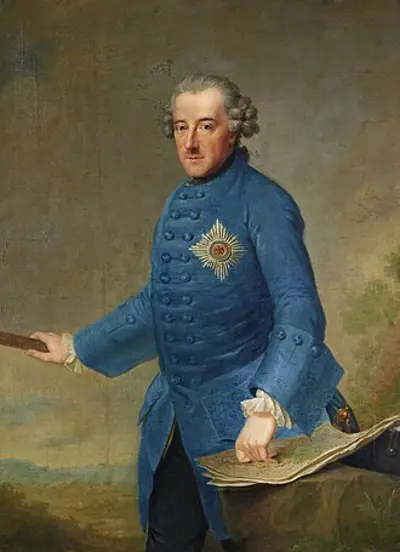
Frederick the Great attacks Saxony, beginning the Seven Years' War in Europe.
Frederick II was the monarch of Prussia from 1740 until his death in 1786. He was the last Hohenzollern monarch titled King in Prussia, declaring himself King of Prussia after ann…
Frederick the Great attacks Saxony, beginning the Seven Years' War in Europe.
Comments 0
Sign in to join the discussion.