1964
The Council of Europe declares May 5 as Europe Day
The Council of Europe declares May 5 as Europe Day.
8398 results for “Basilis C. Xanthopoulos” — type: events (1285 ms)
The Council of Europe declares May 5 as Europe Day.
The General Treaty, by which France, Britain and the United States recognize the sovereignty of West Germany, comes into effect.
The International Military Tribunal for the Far East begins in Tokyo with twenty-eight Japanese military and government officials accused of war crimes and crimes against humanity.
World War II: The Prague uprising begins as an attempt by the Czech resistance to free the city from German occupation.
World War II: Battle of Castle Itter, one of only two battles in that war in which American and German troops fought cooperatively.
Emperor Haile Selassie returns to Addis Ababa; the country commemorates the date as Liberation Day or Patriots' Victory Day.
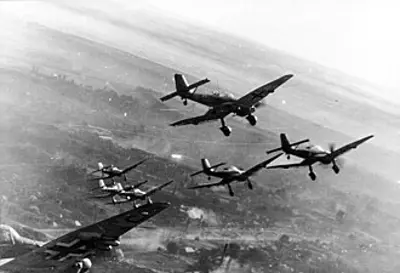
World War II: Norwegian campaign: Norwegian squads in Hegra Fortress and Vinjesvingen capitulate to German forces after all other Norwegian forces in southern Norway had laid down their arms.
The trial in the Stratton Brothers case begins in London, England; it marks the first time that fingerprint evidence is used to gain a conviction for murder.
The Music Hall in New York City (later known as Carnegie Hall) has its grand opening and first public performance, with Tchaikovsky as the guest conductor.
American Indian Wars: Sitting Bull leads his band of Lakota into Canada to avoid harassment by the United States Army under Colonel Nelson Miles.
Memorial Day first celebrated in United States at Waterloo, New York.
American Civil War: The Confederate government was declared dissolved at Washington, Georgia.
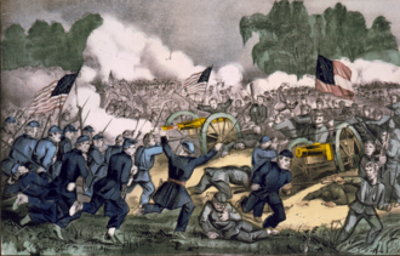
American Civil War: The Battle of the Wilderness begins in Spotsylvania County.
Cinco de Mayo: Troops led by Ignacio Zaragoza halt a French invasion in the Battle of Puebla in Mexico.
The first railway in continental Europe opens between Brussels and Mechelen.

In France, the Estates-General convenes for the first time since 1614.
Cromwell's Act of Grace, aimed at reconciliation with the Scots, proclaimed in Edinburgh.
King Charles I of England dissolves the Short Parliament.
Daimyō (Lord) Shimazu Tadatsune of the Satsuma Domain in southern Kyūshū, Japan, completes his successful invasion of the Ryūkyū Kingdom in Okinawa.
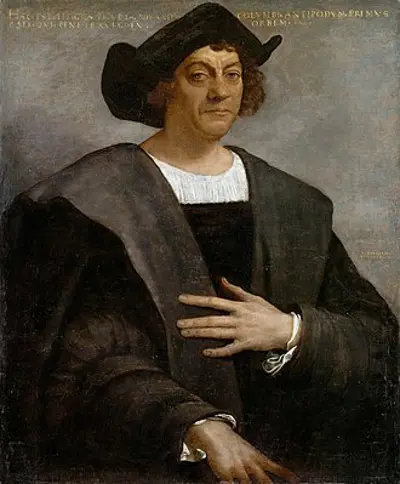
On his second voyage to the New World, Christopher Columbus sights Jamaica, landing at Discovery Bay and declares Jamaica the property of the Spanish crown.