
1557
Anne of Cleves, Queen consort of England (born 1515)
Anne of Cleves was Queen of England as the fourth wife of Henry VIII from 6 January to 12 July 1540.
Anne of Cleves, Queen consort of England (born 1515)
Explore 189 historical events from 1550–1559.
Anne of Cleves was Queen of England as the fourth wife of Henry VIII from 6 January to 12 July 1540.
Anne of Cleves, Queen consort of England (born 1515)
Olaus Magnus was a Swedish writer, cartographer, and Catholic clergyman.
Olaus Magnus, Swedish archbishop, historian, and cartographer (born 1490)

Jacques Cartier was a French maritime explorer from Brittany. Jacques Cartier was the first European to describe and map the Gulf of Saint Lawrence and the shores of the Saint Lawr…
Jacques Cartier, French navigator and explorer (born 1491)
Emperor Go-Nara was the 105th Emperor of Japan, according to the traditional order of succession. He reigned from June 9, 1526, until his death in 1557, during the Sengoku period …
Emperor Go-Nara of Japan (born 1497)
Sir John Cheke was an English classical scholar and statesman. One of the foremost teachers of his age, and the first Regius Professor of Greek at the University of Cambridge, he p…
John Cheke, English scholar and politician, Secretary of State for England (born 1514)
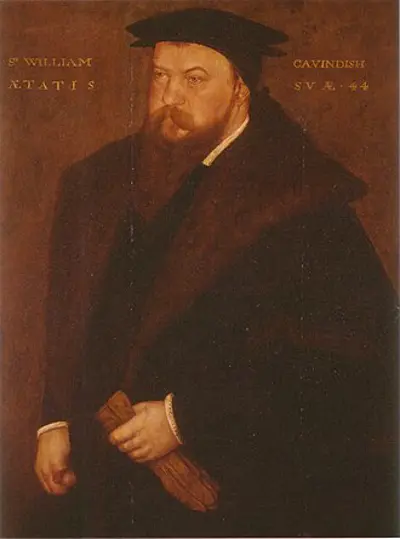
Sir William Cavendish MP was an English politician, knight and courtier. Cavendish held public office and accumulated a considerable fortune, and became one of Thomas Cromwell's "v…
William Cavendish, English courtier and civil servant (born 1505)

The Stratford Martyrs were eleven men and two women who were burned at the stake together for their Protestant beliefs, either at Stratford-le-Bow, Middlesex or Stratford, Essex, b…
The thirteen Stratford Martyrs are burned at the stake near London for their Protestant beliefs
Vlissingen is a municipality and a city in the southwestern Netherlands on the island of Walcheren. With its strategic location between the Scheldt river and the North Sea, Vlissin…
Departing from Vlissingen, ex-Holy Roman Emperor Charles V returns to Spain.
François Béroalde de Verville was a French Renaissance novelist, poet and intellectual. He was born in Paris, the son of Matthieu Brouard, called "Béroalde", a professor of Agrippa…
François Béroalde de Verville, French writer (died 1626)
Prince Jerzy Radziwiłł was a Polish–Lithuanian magnate and Imperial Reichsfürst from the Radziwiłł family. He was ordained a Catholic priest and later rose through the ranks as Bis…
Jerzy Radziwiłł, Catholic cardinal (died 1600)
George Peele was an English translator, poet, and dramatist, who is most noted for his supposed, but not universally accepted, collaboration with William Shakespeare on the play T…
George Peele, English translator, poet, and dramatist (died 1596)
Alexander Briant, SJ was an English Jesuit and martyr, executed at Tyburn.
Alexander Briant, English martyr and saint (died 1581)
Sophia Thott Lange, known by her maiden name, was a Danish noblewoman and horticulturalist with knowledge of astronomy, chemistry, and medicine. She worked alongside her brother Ty…
Sophia Brahe, Danish horticulturalist and astronomer (died 1643)
Aḥmad Bābā al-Timbuktī, was a Sanhaja Berber writer, scholar, and political provocateur in the area then known as the Western Sudan. He was a prolific author and wrote more than 40…
Ahmad Baba al Massufi, Malian academic (died 1627)
Luigi Alamanni was an Italian poet and statesman. He was regarded as a prolific and versatile poet. He was credited with introducing the epigram into Italian poetry.
Luigi Alamanni, Italian poet and politician (born 1495)
Saitō Dōsan , also known as Saitō Toshimasa, was a Japanese samurai lord and daimyo during the Sengoku period. He was also known as the "Viper of Mino" for his ruthless tactics. H…
Saitō Dōsan, Japanese samurai (born 1494)
Martin Agricola was a German composer of Renaissance music and a music theorist.
Martin Agricola, German composer and theorist (born 1486)

Ignatius of Loyola, venerated as Saint Ignatius of Loyola, was a Spanish Basque Catholic priest and theologian, who, with six companions, founded the religious order of the Society…
Ignatius of Loyola, Spanish priest and theologian, founded the Society of Jesus (born 1491)
John Bell was a Bishop of Worcester (1539–1543), who served during the reign of King Henry VIII.
John Bell, English bishop
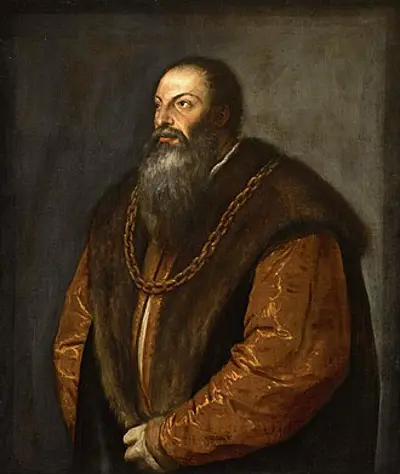
Pietro Aretino was an Italian author, playwright, poet, satirist and blackmailer, who wielded influence on contemporary art and politics. He was one of the most influential writers…
Pietro Aretino, Italian author (born 1492)
Ludovico Carracci was an Italian early-Baroque painter, etcher, and printmaker from Bologna. His works are characterized by a strong mood invoked by broad gestures and flickering l…
Ludovico Carracci, Italian painter and etcher (died 1619)
Jerónima de la Asunción, O.S.C. was a Spanish Catholic nun and abbess who founded the Real Monasterio de Santa Clara in Intramuros, Manila, Philippines.
Jerónima de la Asunción, Spanish Catholic nun and founder of the first monastery in Manila (died 1630)
George Carew, 1st Earl of Totnes, known as Sir George Carew between 1586 and 1605 and as The Lord Carew between 1605 and 1626, served under Elizabeth I during the Tudor conquest of…
George Carew, 1st Earl of Totnes, English general and administrator (died 1629)

The Ottoman Empire, historically also known as the Turkish Empire, was a state that spanned much of Southeast Europe, West Asia, and North Africa from the 14th century to the early…
The Ottoman Empire and the Safavid Empire sign a peace treaty to end the Ottoman–Safavid War of 1532–1555