1575
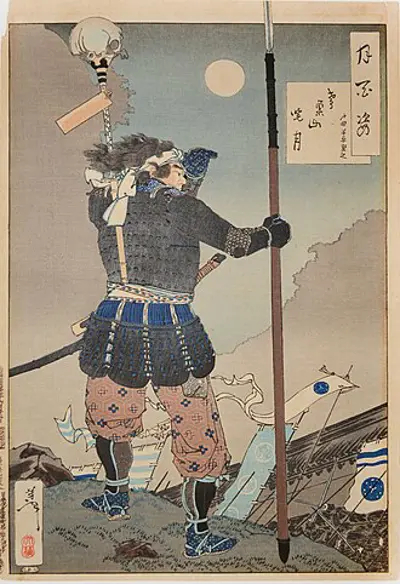
Yonekura Shigetsugu, Japanese samurai
Yonekura Shigetsugu (died 1575) was a famous Japanese samurai and a member of the Takeda clan.
Yonekura Shigetsugu, Japanese samurai
Explore 175 historical events from 1570–1579.
Yonekura Shigetsugu (died 1575) was a famous Japanese samurai and a member of the Takeda clan.
Yonekura Shigetsugu, Japanese samurai
Baba Nobuharu , also known as Baba Nobufusa , was a Japanese samurai of the Sengoku period. He was known as one of the "Twenty-Four Generals of Takeda Shingen". When Takeda Shinge…
Baba Nobuharu, Japanese samurai (born 1515)
Richard Taverner was an English author and religious reformer.
Richard Taverner, English translator (born 1505)
Heinrich Bullinger was a Swiss Reformer and theologian, the successor of Huldrych Zwingli as head of the Church of Zürich and a pastor at the Grossmünster. One of the most importan…
Heinrich Bullinger, Swiss theologian and reformer (born 1504)
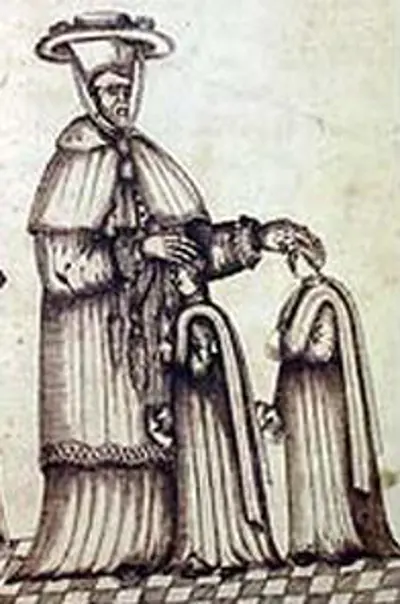
Gaspar Cervantes de Gaeta was a Spanish cardinal of the 16th century. He was a relative of the famous Spanish writer Miguel de Cervantes.
Gaspar Cervantes de Gaeta, Spanish cardinal (born 1511)
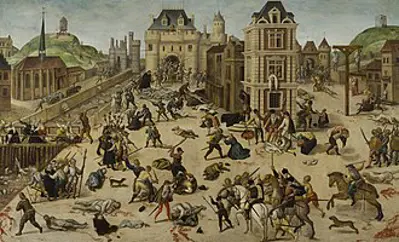
The French Wars of Religion were a series of civil wars between French Catholics and Protestants from 1562 to 1598. Between two and four million people died from violence, famine o…
French Wars of Religion: Catholic forces defeated an armed group of Huguenots attempting to capture Besançon, from which
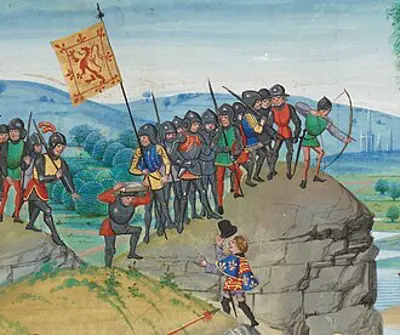
The Anglo-Scottish Wars comprise the various battles which continued to be fought between the Kingdom of England and the Kingdom of Scotland from the time of the Wars of Independen…
Anglo-Scottish Wars: A dispute between Sir John Forster and Sir John Carmichael led to a Scottish raid on…
Henry III of France was King of France from 1574 until his assassination in 1589 and, as Henry of Valois, King of Poland and Grand Duke of Lithuania from 1573 to 1575. Before he ca…
Henry III becomes King of France
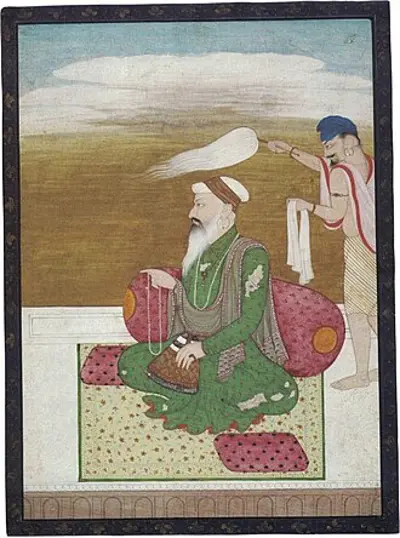
Guru Ram Das, sometimes spelled as Guru Ramdas, was the fourth of the ten Sikh gurus. He was born to a family based in Lahore. His birth name was Jetha, and he was orphaned at age …
Guru Ram Das becomes the Fourth Sikh Guru/Master.
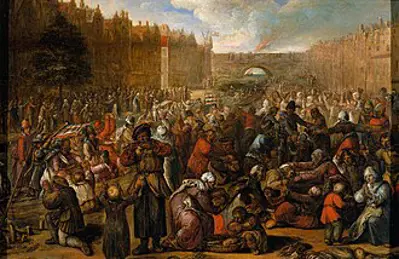
The siege of Leiden occurred during the Eighty Years' War in 1573 and 1574, when the Spanish under Francisco de Valdez attempted to capture the rebellious city of Leiden, South Hol…
The Siege of Leiden is lifted by the Watergeuzen.
Pope Innocent X, born Giovanni Battista Pamphili), was head of the Catholic Church and ruler of the Papal States from 15 September 1644 to his death, in January 1655.
Innocent X, pope of the Catholic Church (died 1655)
Francesco Rasi was a Tuscan composer, singer (tenor), chitarrone player and poet.
Francesco Rasi, Italian singer-songwriter, theorbo player, and poet (died 1621)
Joseph Hall was an English bishop, satirist and moralist. His contemporaries knew him as a devotional writer, and a high-profile controversialist of the early 1640s. In church poli…
Joseph Hall, English bishop and mystic (died 1656)
Thomas Platter the Younger was a Swiss-born physician, traveller, and diarist, the son of the humanist Thomas Platter the Elder. He was a professor of anatomy, botany, and medicine…
Thomas Platter the Younger, Swiss physician and author (died 1628)
Sir Robert Dudley was an English explorer and cartographer. In 1594, he led an expedition to the West Indies, of which he wrote an account. The illegitimate son of Robert Dudley, 1…
Robert Dudley, English explorer and cartographer (died 1649)
Albert Szenczi Molnár was a Hungarian Calvinist pastor, linguist, philosopher, poet, religious writer and translator.
Albert Szenczi Molnár, Hungarian writer and translator (died 1634)
Ludovic Stewart, 2nd Duke of Lennox and 1st Duke of Richmond was a Scottish nobleman and a second cousin of King James VI and I. He was involved in court theatre and the Plantation…
Ludovic Stewart, 2nd Duke of Lennox, Scottish nobleman and politician (died 1624)
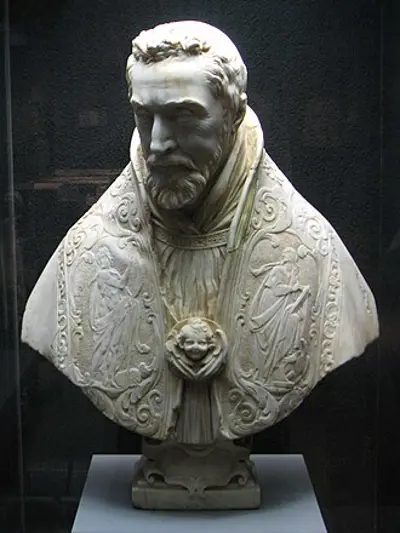
François d'Escoubleau de Sourdis was a French Catholic prelate, the archbishop of Bordeaux and founder of the Irish College in Bordeaux in 1603.
François de Sourdis, French Catholic prelate (died 1628)
Joachim Camerarius, the Elder, was a German classical scholar. His critical abilities, his deep understanding of Greek and Latin, and his wide-ranging knowledge of the ancient worl…
Joachim Camerarius, German scholar and translator (born 1500)
Cosimo I de' Medici was the second and last duke of Florence from 1537 until 1569, when he became the first grand duke of Tuscany, a title he held until his death. Cosimo I succeed…
Cosimo I de' Medici, Grand Duke of Tuscany (born 1519)
Charles IX was King of France from 1560 until his death in 1574. He ascended the French throne upon the death of his brother Francis II in 1560, and as such was the penultimate mon…
Charles IX of France (born 1550)
Renée of France, was Duchess of Ferrara from 31 October 1534 until 3 October 1559 by marriage to Ercole II d'Este, a grandson of Pope Alexander VI. She was the younger daughter of …
Renée of France, Duchess of Ferrara (born 1510)
Giorgio Vasari was an Italian Renaissance painter, architect, art historian, and biographer known for his work Lives of the Most Excellent Painters, Sculptors, and Architects, cons…
Giorgio Vasari, Italian historian, painter, and architect (born 1511)
Ebussuud Efendi, was a Hanafi Maturidi Ottoman jurist and Quran exegete, served as the Qadi (judge) of Istanbul from 1533 to 1537, and the Shaykh al-Islām of the Ottoman Empire fro…
Ebussuud Efendi, Turkish lawyer and jurist (born 1490)