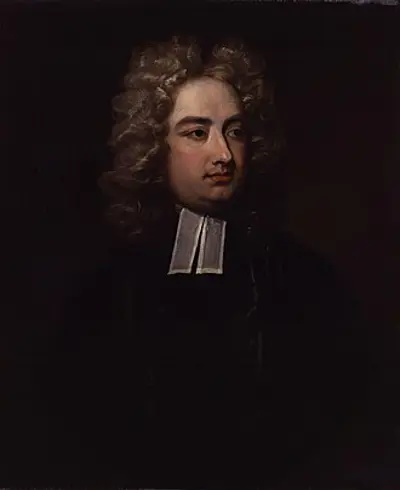
Andrea Luchesi, Italian organist and composer (died 1801)
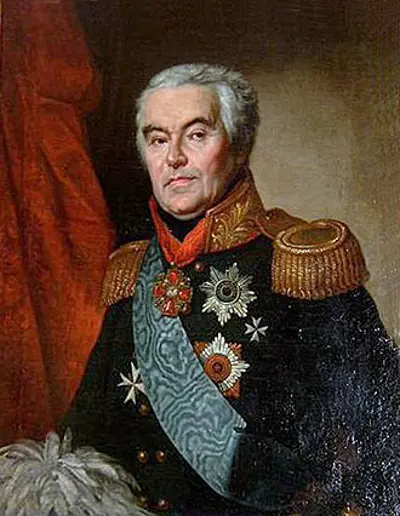
Andrea Luca Luchesi was an Italian composer. He knew Mozart and Beethoven.
Andrea Luchesi, Italian organist and composer (died 1801)
Explore 120 historical events from 1740β1749.
Andrea Luca Luchesi was an Italian composer. He knew Mozart and Beethoven.
Andrea Luchesi, Italian organist and composer (died 1801)
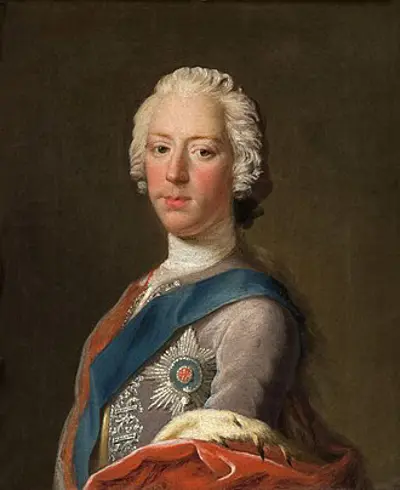
Prince Benedetto, Duke of Chablais was an Italian nobleman and military leader. He was the youngest child of King Charles Emmanuel III of Sardinia. He married his half-niece Maria …
Prince Benedetto, Duke of Chablais (died 1808)
Aleksei Ilyich Chirikov was a Russian navigator and captain who, along with Vitus Bering, was the first Russian to reach the northwest coast of North America. He discovered and cha…
Aleksei Chirikov sights land in Southeast Alaska. He sends men ashore in a longboat, making them the first Europeans…
Joseph Warren, was an American physician who was one of the most important figures in the Patriot movement in Boston during the early days of the American Revolution, eventually se…
Joseph Warren, American physician and general (died 1775)
François Hippolyte Barthélemon was a French violinist, pedagogue, and composer active in England.
François-Hippolyte Barthélémon, French-English violinist and composer (died 1808)
Magnus Julius De la Gardie, son of Axel Julius De la Gardie, was a Swedish general and statesman, member of the Swedish Hats Party.
Magnus Julius De la Gardie, Swedish general and politician (born 1668)
Daniel Ernst Jablonski was a German theologian and reformer of Czech origin, known for his efforts to bring about a union between Lutheran and Calvinist Protestants.
Daniel Ernst Jablonski, German bishop and theologian (born 1660)
Antonio Lucio Vivaldi was an Italian composer, virtuoso violinist and impresario of Baroque music. Regarded as one of the greatest Baroque composers, Vivaldi's influence during his…
Antonio Vivaldi, Italian violinist and composer (born 1678)
The Province of Georgia was one of the Southern Colonies in colonial-era British America. Founded as a British proprietary colony in 1732, in 1751 it became a royal colony. In 1775…
Georgia provincial governor James Oglethorpe begins an unsuccessful attempt to take Spanish Florida during the Siege of
The Battle of Bloody Mose was a significant action of the War of Jenkins' Ear that took place on June 14, 1740, in Spanish Florida. Captain Antonio Salgado commanded a Spanish colu…
A combined force of Spanish, free blacks and allied Indians defeat a British garrison at the Siege of Fort Mose near St
Sir Francis Baring, 1st Baronet was an English merchant banker, a member of the Baring family, later becoming the first of the Baring baronets.
Sir Francis Baring, 1st Baronet, English banker and politician (died 1810)
Elias Boudinot was an American Founding Father, lawyer, statesman, and early abolitionist and women's rights advocate. During the Revolutionary War, Boudinot was an intelligence of…
Elias Boudinot, American lawyer and politician, 10th President of the Continental Congress (died 1821)
Nikolai Petrovich Arkharov was a Russian chief of police best known for having given his name to the Russian term arkharovtsy, an ironic appellation of policemen.
Nikolai Arkharov, Russian police officer and general (died 1814)
Giovanni Paisiello was an Italian composer of the Classical era, and was the most popular opera composer of the late 1700s. His operatic style influenced Mozart and Rossini.
Giovanni Paisiello, Italian composer and educator (probable; (died 1816)
Donatien Alphonse François, Marquis de Sade was a French writer, libertine, political activist, and nobleman best known for his libertine novels and imprisonment for sex crimes, bl…
Marquis de Sade, French philosopher and politician (died 1814)
Jeanne Baret was a French explorer, naturalist, and botanist who is recognised as the first woman to have completed a voyage of circumnavigation of the globe, which she did via boa…
Jeanne Baré, French explorer (died 1803)
Thomas Tickell was a minor English poet and man of letters.
Thomas Tickell, English poet and author (born 1685)
Ephraim Chambers was an English writer and encyclopaedist, who is primarily known for producing the Cyclopaedia, or an Universal Dictionary of Arts and Sciences. Chambers' Cyclopæd…
Ephraim Chambers, English publisher (born 1680)
Frederick William I, known as the Soldier King, was King in Prussia and Elector of Brandenburg from 1713 until his death in 1740, as well as Prince of Neuchâtel.
Frederick William I of Prussia (born 1688)
Samuel Werenfels was a Swiss theologian. He was a major figure in the move towards a "reasonable orthodoxy" in Swiss Reformed theology.
Samuel Werenfels, Swiss theologian (born 1657)
Henry Grey, 1st Duke of Kent, was a British politician and courtier. None of his sons outlived him, so his new title became extinct on his death. Though the house he built at Wrest…
Henry Grey, 1st Duke of Kent, English politician and courtier (born 1671)
Major-General Alexander Spotswood was a British army officer, explorer and colonial administrator who served as the governor of Virginia from 1710 to 1722. After an unsatisfactory …
Alexander Spotswood, Moroccan-American colonial and politician, Lieutenant Governor of Virginia (born 1676)
Sir William Wyndham, 3rd Baronet was a British Tory politician who sat in the House of Commons of Great Britain from 1710 to 1740. He served as Secretary at War in 1712 and Chancel…
Sir William Wyndham, 3rd Baronet, English politician, Chancellor of the Exchequer (born 1687)
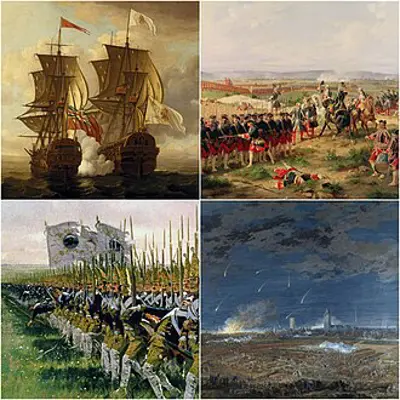
The War of Jenkins' Ear was fought between Great Britain and Spain from 1739 to 1748. Most of the fighting took place in New Granada and the Caribbean Sea, with major operations ov…
War of Jenkins' Ear: Spanish troops stormed the British-held strategically crucial position of Fort Mose in Spanish Flor