Anders Dahl, Swedish botanist and physician (born 1751)
Anders Dahl was a Swedish botanist and student of Carl Linnaeus. The dahlia flower is named after him.
Anders Dahl, Swedish botanist and physician (born 1751)
Explore 200 historical events from 1780β1789.
Anders Dahl was a Swedish botanist and student of Carl Linnaeus. The dahlia flower is named after him.
Anders Dahl, Swedish botanist and physician (born 1751)
Victor de Riqueti, Marquis de Mirabeau was a French economist of the Physiocratic school. He was the father of Honoré, Comte de Mirabeau and André Boniface Louis Riqueti de Mirabea…
Victor de Riqueti, marquis de Mirabeau, French economist and academic (born 1715)
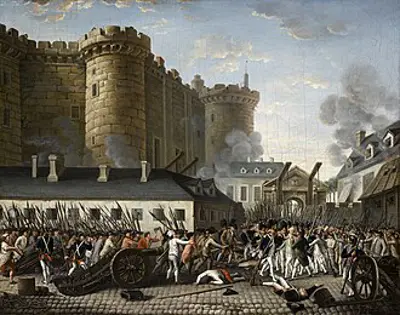
The Storming of the Bastille, which occurred in Paris, France, on 14 July 1789, was an act of political violence by revolutionary insurgents who attempted to storm and seize contro…
Storming of the Bastille in Paris. This event escalates the widespread discontent into the French Revolution. Bastille…
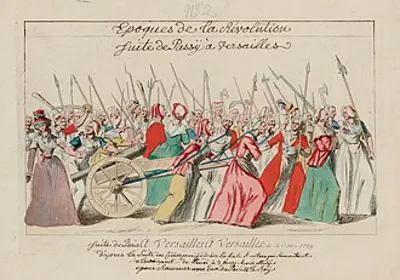
The French Revolution was a period of political and societal change in France that began with the Estates General of 1789 and ended with the Coup of 18 Brumaire on 9 November 1799.…
French Revolution: Gilbert du Motier, Marquis de Lafayette, is named by acclamation Colonel General of the new…
Josiah Henson was an author, abolitionist, and minister. Born into slavery, in Port Tobacco, Charles County, Maryland, he escaped to Upper Canada in 1830, and founded a settlement …
Josiah Henson, American minister, author, and activist (died 1883)
Lieutenant General Jean-Baptiste Vaquette de Gribeauval was a French artillery officer and engineer who revolutionised the French cannon, creating a new production system that allo…
Jean-Baptiste Vaquette de Gribeauval, French general and engineer (born 1715)
Jacques de Flesselles was a French official and one of the early victims of the French Revolution.
Jacques de Flesselles, French politician (born 1721)
Bernard René Jourdan, marquis de Launay was a French Royal Army officer who served as the governor of the Bastille. He was the son of a previous governor, and commander of the Bast…
Bernard-René de Launay, French politician (born 1740)
Jacques Duphly was a French harpsichordist and composer.
Jacques Duphly, French harpsichord player and composer (born 1715)
Joseph-François Foullon de Doué was a French politician and a Controller-General of Finances under Louis XVI.
Joseph Foullon de Doué, French politician, Controller-General of Finances (born 1715)
Fletcher Christian was an English sailor who led the mutiny on the Bounty in 1789, during which he seized command of the Royal Navy vessel HMS Bounty from Lieutenant William Bligh.
Fletcher Christian, the acting lieutenant on board the Royal Navy ship Bounty, led a mutiny against the commander Willia
George Washington's reception at Trenton was a celebration hosted by the Ladies of Trenton social club on April 21, 1789, in Trenton, New Jersey, as George Washington, then preside…
The Ladies of Trenton social club hosted a reception for President-elect George Washington as he journeyed to New York C
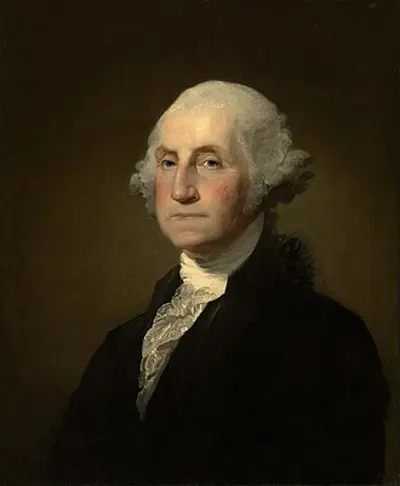
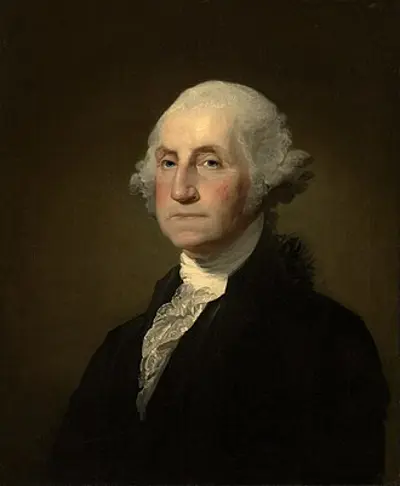
George Washington was a Founding Father and the first president of the United States, serving from 1789 to 1797. As commander of the Continental Army, Washington led Patriot forces…
George Washington (pictured) took the oath of office as the first president of the United States at Federal Hall in New
The Boydell Shakespeare Gallery in London, England, was the first stage of a three-part project initiated in November 1786 by engraver and publisher John Boydell in an effort to fo…
The Boydell Shakespeare Gallery, part of a cultural project initiated by engraver John Boydell, opened in London
The French Revolution was a period of political and societal change in France that began with the Estates General of 1789 and ended with the Coup of 18 Brumaire on 9 November 1799.…
French Revolution: Jacques Necker was dismissed as Director-General of Finances of France, sparking public…
The Bastille was a medieval fortress in Paris, known as the Bastille Saint-Antoine. It played an important role in the internal conflicts of France and for most of its history was …
The Bastille, a fortress and prison in Paris, was stormed by a crowd during the flashpoint of the French Revolution.
Maryland is a state in the Mid-Atlantic and Southeastern regions of the United States. It borders Virginia to its south, West Virginia to its west, Pennsylvania to its north, and D…
Maryland becomes the seventh state to ratify the United States Constitution
Étienne Charles de Loménie de Brienne was a French clergyman, bishop, cardinal, politician and finance minister of King Louis XVI.
King Louis XVI of France attempts to impose the reforms of Étienne Charles de Loménie de Brienne by abolishing the parle
South Carolina is a state in the Southeastern, South Atlantic and Deep South regions of the United States. It borders North Carolina to the north and northeast, the Atlantic Ocean …
South Carolina became the eighth state to ratify the United States Constitution
Gerasim Grigoryevich Izmaylov was a Russian navigator involved in the Russian colonization of the Americas and in the establishment of the colonies of Russian America in Alaska. He…
Russian explorer Gerasim Izmailov reaches Alaska
Wolfgang Amadeus Mozart was a Classical composer and musician. He completed more than 800 works in his life—including outstanding examples of most of the genres of his time: sympho…
Wolfgang Amadeus Mozart completes his Symphony No. 40 in G minor (K550).
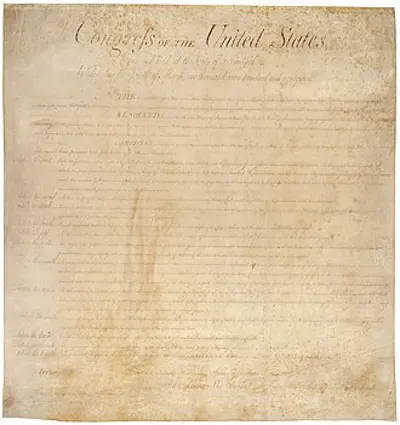
The Constitution of the United States is the supreme law of the United States of America. It superseded the Articles of Confederation, the nation's first constitution, on March 4, …
New York ratifies the United States Constitution and becomes the 11th state of the United States.
Charles Robert Cockerell was an English architect, archaeologist and writer. He studied architecture under Robert Smirke and embarked on an extended Grand Tour lasting seven years,…
Charles Robert Cockerell, English architect, archaeologist, and writer (died 1863)
The French Revolution was a period of political and societal change in France that began with the Estates General of 1789 and ended with the Coup of 18 Brumaire on 9 November 1799.…
French Revolution: Day of the Tiles: Civilians in Grenoble toss roof tiles and various objects down upon royal troops