Charles A
Charles Anderson Wickliffe was an American politician who was the 11th U.S. postmaster general from 1841 to 1845. He served as the 14th governor of Kentucky from 1839 to 1840 and a…
Charles A
Explore 315 historical events from 1780β1789.
Charles Anderson Wickliffe was an American politician who was the 11th U.S. postmaster general from 1841 to 1845. He served as the 14th governor of Kentucky from 1839 to 1840 and a…
Charles A
Thomas Blanchard was an American inventor who lived much of his life in Springfield, Massachusetts, where in 1819, he pioneered the assembly line style of mass production in Americ…
Thomas Blanchard, American inventor (died 1864)
Jean-Victor Poncelet was a French engineer and mathematician who served most notably as the Commanding General of the École Polytechnique. He is considered a reviver of projective …
Jean-Victor Poncelet, French mathematician and engineer (died 1867)
Leopold Gmelin was a German chemist. Gmelin was a professor at the University of Heidelberg. He worked on the red prussiate and created Gmelin's test, and wrote his Handbook of Che…
Leopold Gmelin, German chemist and academic (died 1853)
Adoniram Judson was an American Particular Baptist missionary who worked in Burma for almost 40 years. At the age of 25, Judson was sent from North America to preach in Burma. His…
Adoniram Judson, American missionary and lexicographer (died 1850)
Jacques Boucher de Crèvecœur de Perthes, sometimes referred to as Boucher de Perthes, was a French archaeologist and antiquary notable for his discovery, in about 1830, of flint to…
Jacques Boucher de Crèvecœur de Perthes, French archaeologist and author (died 1868)
Georges-Louis Leclerc, Comte de Buffon was a French naturalist, mathematician, and cosmologist. He held the position of intendant (director) at the Jardin du Roi, now called the Ja…
Georges-Louis Leclerc, Comte de Buffon, French mathematician, cosmologist, and author (born 1707)
Giovanni Antonio Scopoli was an Italian medical doctor and naturalist. His biographer Otto Guglia named him the "first anational European" and the "Linnaeus of the Austrian Empire"…
Giovanni Antonio Scopoli, Italian physician and botanist (born 1723)
Adam Gib was a Scottish religious leader, head of the Antiburgher section of the Scottish Secession Church. He reportedly wrote his first covenant with God in the blood of his own …
Adam Gib, Scottish religious leader (born 1714)
Thomas Gainsborough was an English painter, draughtsman and printmaker who specialised in portrait and landscape painting. Along with his rival Sir Joshua Reynolds, he was one of t…
Thomas Gainsborough, English painter (born 1727)
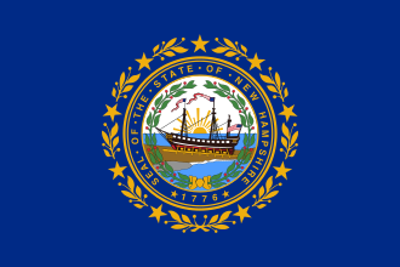
New Hampshire is a state in the New England region of the Northeastern United States. It borders Massachusetts to the south, Vermont to the west, Maine and the Gulf of Maine to the…
New Hampshire ratified the U
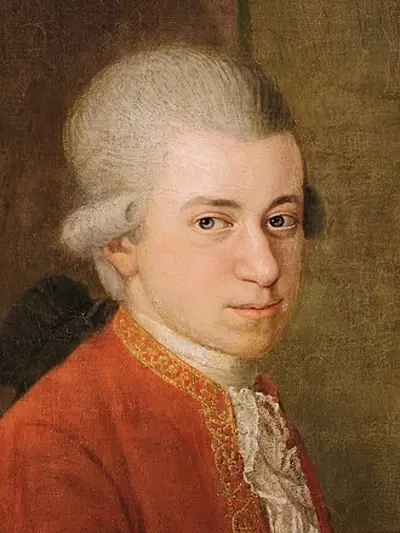
Wolfgang Amadeus Mozart was a Classical composer and musician. He completed more than 800 works in his life—including outstanding examples of most of the genres of his time: sympho…
Mozart completed his Symphony No. 40, one of his two extant symphonies in a minor key.
Oliver Ellsworth was a Founding Father of the United States, attorney, jurist, politician, and diplomat. Ellsworth was a framer of the United States Constitution, United States sen…
Oliver Ellsworth moves at the Federal Convention to call the government the 'United States'
Erastus "Deaf" Smith, who earned his nickname due to hearing loss in childhood, was an American frontiersman noted for his part in the Texas Revolution and the Army of the Republic…
Deaf Smith, American soldier (died 1837)
Johann Ludwig Uhland was a German poet, philologist, literary historian, lawyer and politician.
Ludwig Uhland, German poet, philologist, and historian (died 1862)
Jacques Viger was an antiquarian, archaeologist, and the first mayor of Montreal, Quebec, Canada.
Jacques Viger, Canadian archaeologist and politician, 1st mayor of Montreal (died 1858)
Louis-Constant Prévost was a French geologist.
Constant Prévost, French geologist and academic (died 1856)
John Owen was the 24th Governor of the U.S. state of North Carolina and the state's first Democratic governor from 1828 to 1830.
John Owen, American governor of North Carolina (died 1841)
James Weddell was a British sailor, navigator and seal hunter who in February 1823 sailed to latitude of 74° 15′ S, a record 7.69 degrees or 532 statute miles south of the Antarcti…
James Weddell, Belgian-English sailor, hunter, and explorer (died 1834)
François Sulpice Beudant was a French mineralogist and geologist. The mineral beudantite was named after him.
François Sulpice Beudant, French mineralogist and geologist (died 1850)
John Jordan Crittenden was an American statesman and politician from the U.S. state of Kentucky. He represented the state in the U.S. House of Representatives and the U.S. Senate a…
John J. Crittenden, American statesman and politician (died 1863)
The Constitutional Convention took place in Philadelphia from May 25 to September 17, 1787. While the convention was initially intended to revise the league of states and the first…
After a delay of 11 days, the United States Constitutional Convention formally convenes in Philadelphia after a quorum o
The Congress of the Confederation, or the Confederation Congress, formally referred to as the United States in Congress Assembled, was the governing body of the United States from …
The Congress of the Confederation enacts the Northwest Ordinance establishing governing rules for the Northwest…
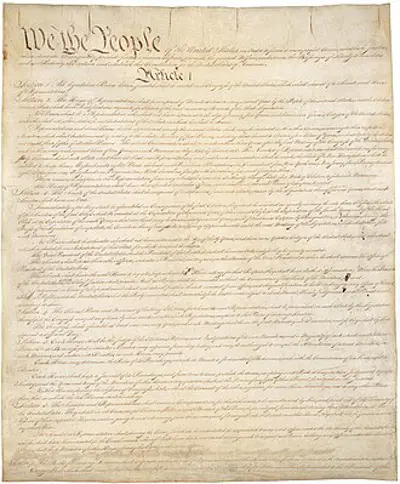
The Constitution of the United States is the supreme law of the United States of America. It superseded the Articles of Confederation, the nation's first constitution, on March 4, …
Sixty proof sheets of the Constitution of the United States are delivered to the Constitutional Convention in…