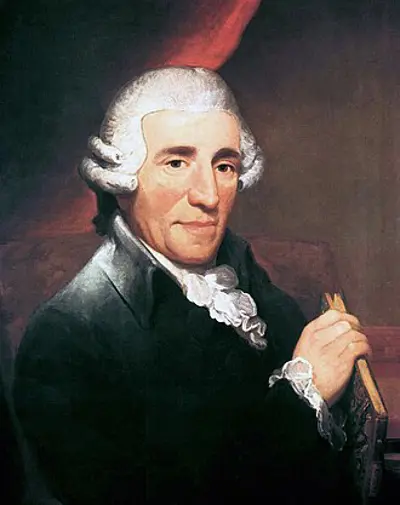
Michael William Balfe, Irish composer and conductor (died 1870)
Michael William Balfe was an Irish composer, best remembered for his operas, especially The Bohemian Girl.
Michael William Balfe, Irish composer and conductor (died 1870)
Explore 131 historical events from 1800β1809.
Michael William Balfe was an Irish composer, best remembered for his operas, especially The Bohemian Girl.
Michael William Balfe, Irish composer and conductor (died 1870)
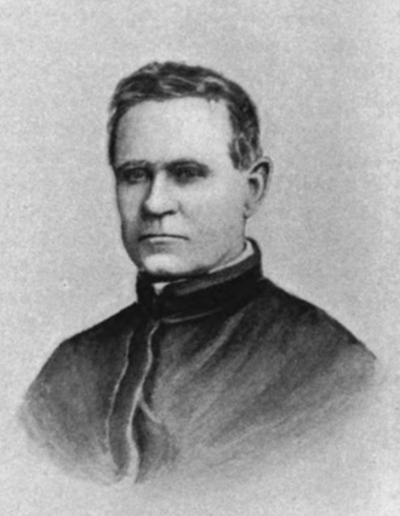
David de Jahacob Lopez Cardozo was a Dutch Talmudist and communal worker. He was sent at an early age to the bet ha-midrash 'Etz Chayyim, studied under Rabbi Berenstein at The Hagu…
David de Jahacob Lopez Cardozo, Dutch Talmudist (died 1890)
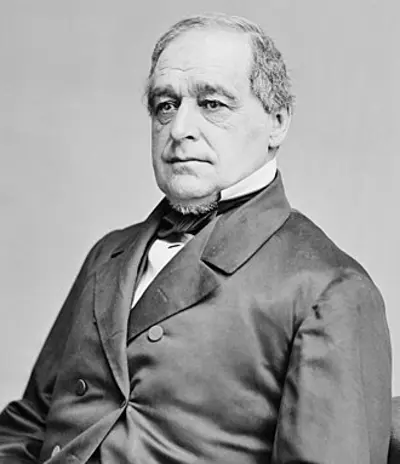
Sir Henry Watson Parker, was Premier of New South Wales. He fitted into colonial society and politics in the era before responsible government, but his style was not suited to the …
Henry Parker, English-Australian politician, 3rd Premier of New South Wales (died 1881)
Pierre Jean Georges Cabanis was a French physiologist, Freemason, materialist philosopher and leading idéologue.
Pierre Jean George Cabanis, French physiologist and philosopher (born 1757)
The Finnish War was fought between the Kingdom of Sweden and the Russian Empire from 21 February 1808 to 17 September 1809 as part of the Napoleonic Wars. As a result of the war, t…
Finnish War: Swedish-Finnish troops, led by Captain Karl Wilhelm Malmi, conquer the city of Kuopio from Russians after t
Napoleon III was President of France from 1848 to 1852 and then Emperor of the French from 1852 until his deposition in 1870. He was the first president, second emperor, and last m…
Napoleon III, French politician, 1st President of France, Emperor of French Second Empire (died 1873)
Gérard de Nerval, was the pen name of Gérard Labrunie, a French travel writer, essayist, poet, and translator. He was a major figure during the era of French romanticism, and best …
Gérard de Nerval, French poet and translator (died 1855)
Jefferson F. Davis was the only president of the Confederate States from 1861 to 1865, leading the Confederacy during the American Civil War. Before the war, he was a member of the…
Jefferson Davis, American colonel and politician, President of the Confederate States of America from 1861 - 1865 (died
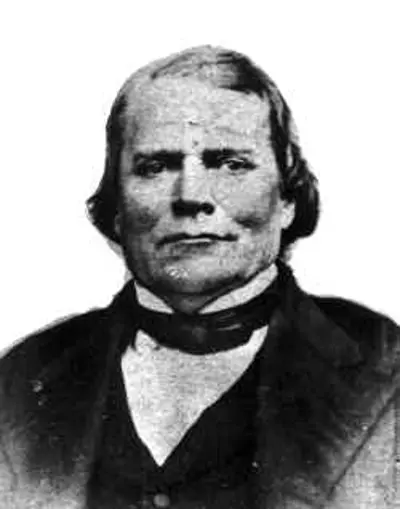
Elijah Craig was an American Baptist preacher, who became an educator and capitalist entrepreneur in the area of Virginia that later became the Commonwealth of Kentucky. He has som…
Elijah Craig, American minister, inventor, and educator, invented Bourbon whiskey (born 1738)
Richard Hurd was an English divine and writer, and bishop of Worcester.
Richard Hurd, English bishop (born 1720)
The Slave Trade Act 1807, or the Abolition of Slave Trade Act 1807, was an act of the Parliament of the United Kingdom prohibiting the Atlantic slave trade in the British Empire. A…
The Slave Trade Act 1807 takes effect, abolishing the slave trade within the British Empire
A grand jury is a jury empowered by law to conduct legal proceedings, investigate potential criminal conduct, and determine whether criminal charges should be brought. A grand jur…
A grand jury indicts former Vice President of the United States Aaron Burr on a charge of treason
Kabakçı Mustafa was a rebel leader who caused the delay of Ottoman reformation in the early 19th century.
Outbreak of the Kabakçı Mustafa rebellion in response to intentions of sultan Selim III to reform the Ottoman army
Mustafa IV was the sultan of the Ottoman Empire from 1807 to 1808.
Mustafa IV became Sultan of the Ottoman Empire and Caliph of Islam
Jean Louis Rodolphe Agassiz was a Swiss-born American biologist and geologist who is recognized as a scholar of Earth's natural history.
Louis Agassiz, Swiss-American paleontologist and geologist (died 1873)
Jean-Baptiste Donatien de Vimeur, comte de Rochambeau was a French Royal Army officer who played a critical role in the American victory at the siege of Yorktown in 1781 during the…
Jean-Baptiste Donatien de Vimeur, comte de Rochambeau, French general (born 1725)
Eliphalet Dyer was an American lawyer, jurist, and statesman from Windham, Connecticut. He was a delegate for Connecticut to many sessions of the Continental Congress, where he sig…
Eliphalet Dyer, American colonel, lawyer, and politician (born 1721)
John Gunby was an American planter and soldier from Somerset County, Maryland, who is considered by many to be "one of the most gallant officers of the Maryland Line under Gen. Sma…
John Gunby, American general (born 1745)
John Douglas was a Scottish scholar and Anglican bishop.
John Douglas, Scottish bishop and scholar (born 1721)
Sarah George Bagley was an American labor leader in New England during the 1840s; an advocate of shorter workdays for factory operatives and mechanics, she campaigned to make ten h…
Sarah Bagley, American labor organizer (died 1889)
Catherine Labouré, DC was a French member of the Daughters of Charity of Saint Vincent de Paul and a Marian visionary. She is believed to have relayed the request from the Blessed …
Catherine Labouré, French nun and saint (died 1876)
Johan Vilhelm Snellman was an influential Fennoman philosopher and Finnish statesman, ennobled in 1866. He was one of the most important 'awakeners' or promoters of Finnish nationa…
Johan Vilhelm Snellman, Finnish philosopher and politician (died 1881)
Harriet Elizabeth Georgiana Sutherland-Leveson-Gower, Duchess of Sutherland, styled The Honourable Harriet Howard before her marriage, was an English courtier and abolitionist from…
Harriet Sutherland-Leveson-Gower, Duchess of Sutherland, English duchess (died 1868)
The action of 21 April 1806 was a minor engagement between the French and British navies off the Cape Colony during the Napoleonic Wars. The Isle Bonaparte and Isle de France were …
Action of 21 April 1806: A French frigate escapes British forces off the coast of South Africa