Washington, D
Washington, D.C., officially the District of Columbia and commonly known as simply Washington or D.C., is the capital city and federal district of the United States. The city is on…
Washington, D
Explore 131 historical events from 1800β1809.
Washington, D.C., officially the District of Columbia and commonly known as simply Washington or D.C., is the capital city and federal district of the United States. The city is on…
Washington, D
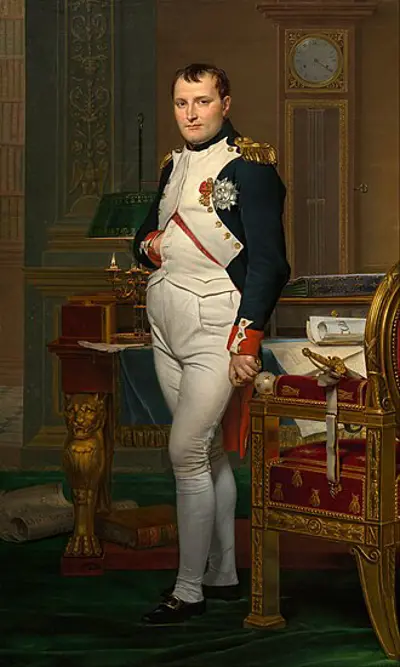
Napoleon Bonaparte, later known by his regnal name Napoleon I, was Emperor of the French from 18 May 1804 until his first abdication in 1814, with a brief restoration during the Hu…
Napoleon Bonaparte founds the Legion of Honour
Guadeloupe is an overseas department and region of the French Republic in the Caribbean. It consists of six inhabited islands—Basse-Terre, Grande-Terre, Marie-Galante, La Désirade,…
In Guadeloupe, 400 rebellious slaves, led by Louis Delgrès, blow themselves up rather than submit to Napoleon's troops
Erasmus Robert Darwin was an English physician. One of the key thinkers of the Midlands Enlightenment, he was also a natural philosopher, physiologist, abolitionist, inventor, free…
Erasmus Darwin, English physician and botanist (born 1731)
Herman Willem Daendels was a Dutch military officer and colonial administrator who served as governor-general of the Dutch East Indies from 1808 to 1811.
Herman Willem Daendels, Dutch general and politician, Governor-General of the Dutch Gold Coast (born 1762)
Martha Dandridge Custis Washington was the wife of George Washington, who was a Founding Father and the first president of the United States. Although the title was not coined unti…
Martha Washington, First, First Lady of the United States (born 1731)
Henry Hacking was an English-born sailor and explorer who was one of the first British colonists in New South Wales. He is generally regarded as being the person responsible for sh…
Henry Hacking killed the Aboriginal Australian resistance fighter Pemulwuy after Philip Gidley King ordered that he be b
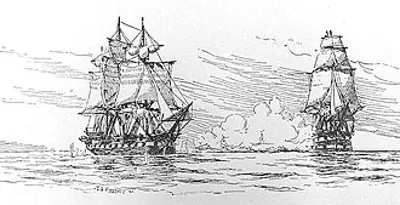
Admiral Thomas Cochrane, 10th Earl of Dundonald, Marquess of Maranhão, styled Lord Cochrane between 1778 and 1831, was a British naval officer, politician and mercenary. Serving du…
Captain Thomas Cochrane in the 14-gun HMS Speedy captures the 32-gun Spanish frigate El Gamo
The First Barbary War (1801–1805), also known as the Tripolitan War and the Barbary Coast War, was a conflict during the 1801–1815 Barbary Wars, in which the United States fought a…
First Barbary War: The Barbary pirates of Tripoli declare war on the United States of America
Ambrose Dudley Mann was the first United States Assistant Secretary of State and a commissioner for the Confederate States of America.
Ambrose Dudley Mann, American politician and diplomat, 1st United States Assistant Secretary of State (died 1889)
Sir Peter Hesketh-Fleetwood, 1st Baronet, was an English landowner, developer and Member of Parliament who founded the town of Fleetwood, in Lancashire, England. Born Peter Hesketh…
Peter Hesketh-Fleetwood, English politician, founded the town of Fleetwood (died 1866)
William Henry Seward was an American politician who served as United States Secretary of State from 1861 to 1869 and earlier served as governor of New York and as a United States s…
William H
Sophie of Sweden was, by marriage, Grand Duchess of Baden as the wife of sovereign Grand Duke of Baden, Leopold.
Princess Sophie of Sweden, Swedish princess (died 1865)
Johann Georg Baiter was a Swiss philologist and textual critic.
Johann Georg Baiter, Swiss philologist and scholar (died 1887)
Brigham Young was an American religious leader and politician. He was the second president of the Church of Jesus Christ of Latter-day Saints from 1847 until his death in 1877. He …
Brigham Young, American religious leader, 2nd President of The Church of Jesus Christ of Latter-day Saints (died 1877)
Sir James Pennethorne was a British architect and planner, particularly associated with buildings and parks in central London.
James Pennethorne, English architect, designed Victoria Park (died 1871)
Prince Nikolai or Nicholas Vasilyevich Repnin was a Russian statesman and general from the Repnin princely family who played a key role in the dissolution of the Polish–Lithuanian …
Nicholas Repnin, Russian general and politician, Governor-General of Baltic provinces (born 1734)
William Heberden FRS was an English physician.
William Heberden, English physician and scholar (born 1710)
Frederick Augustus Conrad Muhlenberg was an American minister and politician who was the first speaker of the United States House of Representatives from 1789 to 1791 and again fro…
Frederick Muhlenberg, American minister and politician, 1st Speaker of the United States House of Representatives (born
The French Revolutionary Wars were a series of sweeping military conflicts resulting from the French Revolution that lasted from 1792 until 1802. They pitted France against Great B…
French Revolutionary Wars: The 32-gun Spanish frigate El Gamo was captured by the outmanned and outgunned HMS Speedy
The First Barbary War (1801–1805), also known as the Tripolitan War and the Barbary Coast War, was a conflict during the 1801–1815 Barbary Wars, in which the United States fought a…
First Barbary War: The Barbary corsairs of Tripoli declared war on the United States by cutting down the flagstaff in fr
The Septinsular Republic, also known as the Republic of the Seven United Islands, was an oligarchic republic that existed from 1800 to 1807 under nominal Russian and Ottoman sovere…
The Septinsular Republic is established
The Library of Congress is a research library in Washington, D.C., serving as the library and research service for the United States Congress and the de facto national library of t…
The United States Library of Congress is established when President John Adams signs legislation to appropriate $5,000 t
The 6th United States Congress was the 6th meeting of the legislative branch of the United States federal government, consisting of the Senate and the House of Representatives. It …
The 6th United States Congress recesses, and the process of moving the Federal government of the United States from Phil