1684
Peter Gunning, English bishop (born 1614)
Peter Gunning was an English Royalist church leader, Bishop of Chichester and Bishop of Ely.
Peter Gunning, English bishop (born 1614)
Explore 205 historical events from 1680–1689.
Peter Gunning was an English Royalist church leader, Bishop of Chichester and Bishop of Ely.
Peter Gunning, English bishop (born 1614)
Elena Lucrezia Cornaro Piscopia or Elena Lucrezia Corner, also known in English as Helen Cornaro, was a philosopher of noble descent in the Republic of Venice who in 1678 became on…
Elena Cornaro Piscopia, Italian mathematician and philosopher (born 1646)
George Booth, 1st Baron Delamer, was an English landowner and politician from Cheshire, who served as an MP from 1646 to 1661, when he was elevated to the House of Lords as Baron D…
George Booth, 1st Baron Delamer, English politician (born 1622)
Kim Seok-ju was a Korean Neo-Confucian scholar, politician and writer of the Joseon Kingdom. His art name was Sigam, and his courtesy name was Sabaek. He was a cousin of Queen Myun…
Kim Seok-ju, Korean scholar and politician (born 1634)
John Nevison, also known as William Nevison or Nevinson, was one of England's most notorious highwaymen, a gentleman rogue supposedly nicknamed Swift Nick by King Charles II after …
John Nevison, English criminal (born 1639)
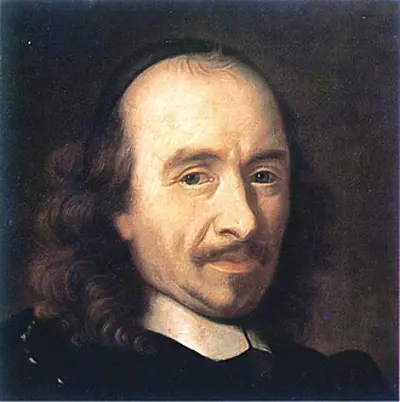
Pierre Corneille was a French tragedian. He is generally considered one of the three great 17th-century French dramatists, along with Molière and Racine.
Pierre Corneille, French playwright (born 1606)
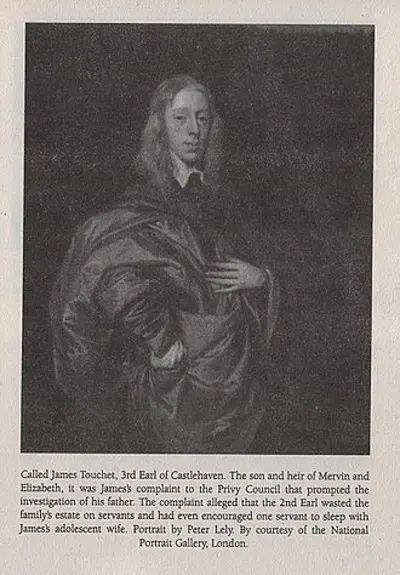
James Tuchet, 3rd Earl of Castlehaven was the son of Mervyn Tuchet, 2nd Earl of Castlehaven and his first wife, Elizabeth Barnham. Castlehaven played a prominent role in the Wars o…
James Tuchet, 3rd Earl of Castlehaven (born c. 1617)
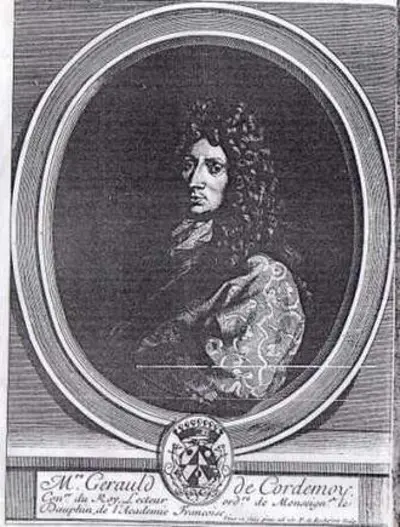
Géraud de Cordemoy was a French philosopher, historian and lawyer. He is mainly known for his works in metaphysics and for his theory of language.
Géraud de Cordemoy, French historian, philosopher and lawyer (born 1626)
The Polish hussars, alternatively known as the winged hussars, were an elite heavy cavalry formation active in Poland and in the Polish–Lithuanian Commonwealth from 1503 to 1702. T…
Coalition forces, including the famous winged Hussars, led by Polish King John III Sobieski lift the siege laid by…
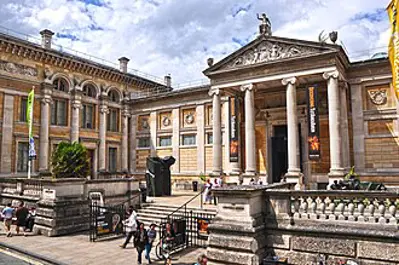
The Ashmolean Museum of Art and Archaeology on Beaumont Street in Oxford, England, is Britain's first public museum. Its first building was erected in 1678–1683 to house the cabine…
The Ashmolean Museum in Oxford, England, opens as the world's first university museum

William Penn was an English writer, theologian, religious thinker, and influential Quaker who founded the Province of Pennsylvania. An advocate of democracy and religious freedom, …
William Penn signs a friendship treaty with Lenape Indians in Pennsylvania
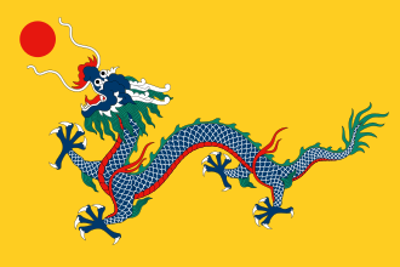
The Qing dynasty, officially the Great Qing, also known as the Qing Empire or Qing China, was a Manchu-led imperial dynasty of China and an early modern empire in East Asia which e…
Manchu Qing dynasty naval forces under commander Shi Lang defeat the Kingdom of Tungning in the Battle of Penghu near…
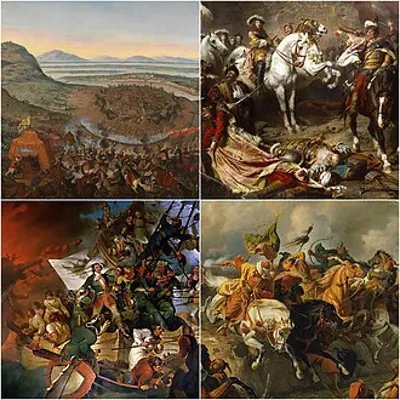
The Great Turkish War was a series of conflicts between the Ottoman Empire and the Holy League consisting of the Holy Roman Empire, Poland-Lithuania, Venice, Russia, and the Kingdo…
Austro-Ottoman War: Battle of Vienna: Several European armies join forces to defeat the Ottoman Empire.
Johann David Heinichen was a German Baroque composer and music theorist who brought the musical genius of Venice to the court of Augustus II the Strong in Dresden. After he died, H…
Johann David Heinichen, German composer and theorist (died 1729)
Étienne Fourmont was a French Orientalist who served as professor of Arabic at the Collège de France and published grammars on the Arabic, Hebrew, and Chinese languages.
Étienne Fourmont, French orientalist and sinologist (died 1745)
Edward Young was an English poet, best remembered for Night-Thoughts, a series of philosophical writings in blank verse, reflecting his state of mind following several bereavements…
Edward Young, English poet, dramatist and literary critic (Night-Thoughts) (died 1765)
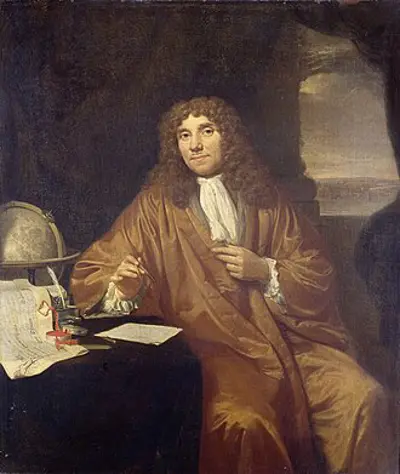
Antonie Philips van Leeuwenhoek was a Dutch microbiologist and microscopist in the Golden Age of Dutch art, science and technology. A largely self-taught man in science, he is comm…
Antonie van Leeuwenhoek writes a letter to the Royal Society describing "animalcules", later known as protozoa.
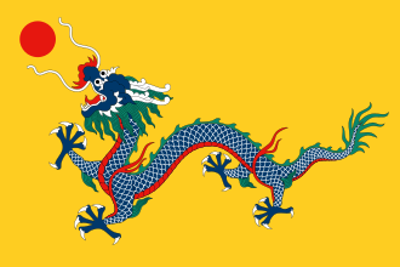
The Qing dynasty, officially the Great Qing, also known as the Qing Empire or Qing China, was a Manchu-led imperial dynasty of China and an early modern empire in East Asia which e…
Qing dynasty naval commander Shi Lang receives the surrender of the Tungning kingdom on Taiwan after the Battle of…
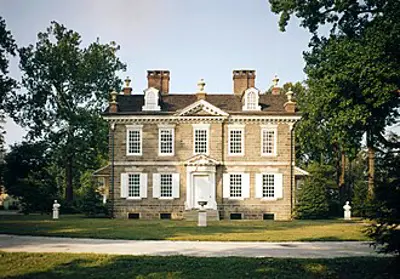
Germantown is an area in Northwest Philadelphia, Pennsylvania, United States. Founded by Palatine, Quaker, and Mennonite families in 1683 as an independent borough, it was absorbed…
Immigrant families found Germantown, Pennsylvania in the first major immigration of German people to America.
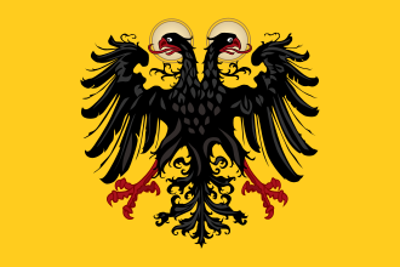
The Holy Roman Empire, also known as the Holy Roman Empire of the German Nation after 1512, was a polity comprising and controlling much of Central Europe and Western Europe, heade…
Allied Imperial and Polish-Lithuanian forces defeat the retreating Ottoman forces in the battle of Parkany.
Pieter Langendijk was a damask weaver, city artist, dramatist, and poet.
Pieter Langendijk, Dutch playwright and poet (died 1756)
Maria Anna of Austria was Queen of Portugal as the wife of King John V of Portugal. She served as the regent of Portugal from 1742 until 1750 during the illness of her husband. She…
Maria Anna of Austria (died 1754)
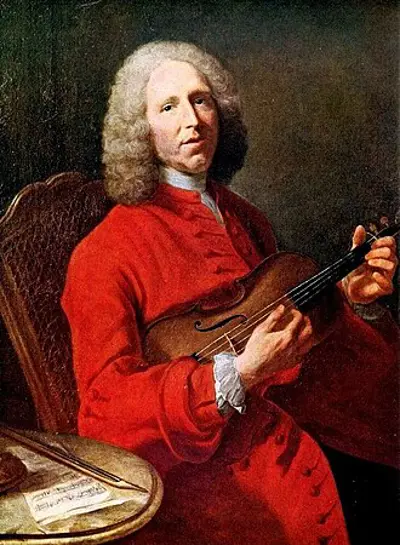
Jean-Philippe Rameau was a French composer and music theorist of the late Baroque era. Regarded as one of the most important French composers and music theorists of the 18th centur…
Jean-Philippe Rameau, French composer and theorist (died 1764)
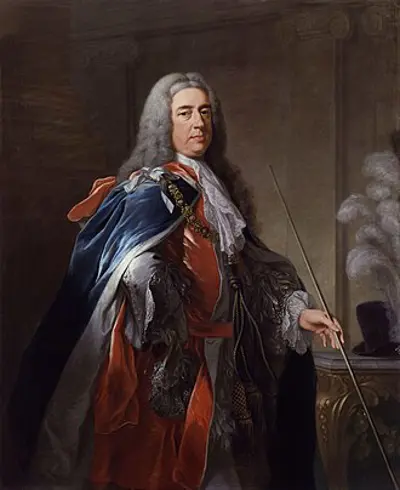
Charles FitzRoy, 2nd Duke of Grafton was a British peer and politician.
Charles FitzRoy, 2nd Duke of Grafton, English-Irish politician, Lord Lieutenant of Ireland (died 1757)